Dog Health: 6 Golden Rules for a Long and Happy Life
Dog health is the most important value to preserve in order to enjoy your beloved pet for as long as possible and in the best way.
However, among false myths and misleading advertisements, it is increasingly difficult to make conscious choices for your dog’s wellbeing. Here, therefore, are all the useful tips to guarantee your dog’s health.
How to keep your dog in good health?
“A sound mind in a sound body,” as Juvenal suggested, even before the clear correlation between body and mind was identified.
The holistic approach that must be applied to human health should now be extended to dog health as well, which requires:
- Knowing and satisfying their psychological and social needs;
- Offering healthy and balanced nutrition (read our in-depth article on homemade diets for dogs);
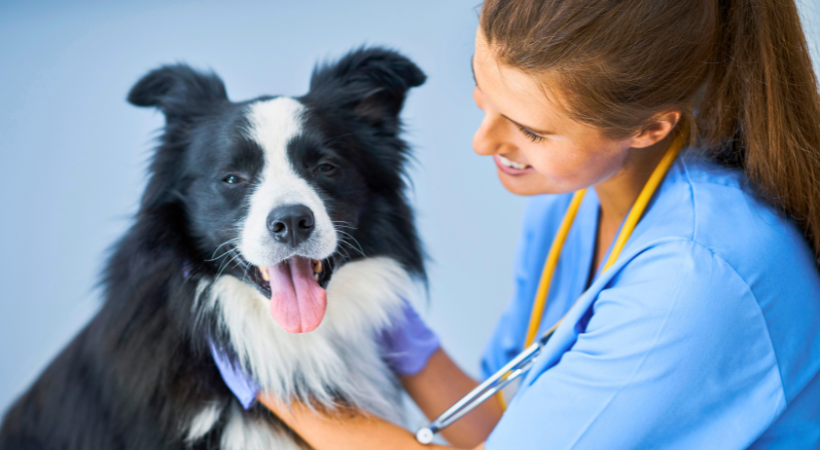
- Regularly attending veterinary check-ups;
- Ensuring constant and adequate physical exercise;
- Completing the vaccination cycle to prevent the most common diseases;
- Using antiparasitic treatments at regular intervals, which eliminate not only fleas and ticks, but also sandflies responsible for the transmission of leishmaniasis;
- Preventing or addressing any food intolerances or allergies.
Dog Health, Psychological Wellbeing and Physical Exercise
To ensure your pet’s psychological wellbeing, it is advisable to:
- Not separate the puppy from its mother and siblings during the first 90 days. Otherwise, serious behavioural disorders may develop;
- Thoroughly understand the breed or history of the dog in question, so as to know its needs in advance and determine whether you are able to meet them. For example, if you choose to adopt a wolf-like dog, it is better to avoid living in cities and provide ample space to accommodate its nature. If you choose to adopt a protection dog, instead, you must be willing to keep it with you during the day, because leaving it alone in the garden would mean enhancing its territoriality and aggression towards strangers;
- Have time and love to give. If you are not willing to take your dog for a walk at least twice a day, to let it socialise with other dogs, to share time and space with it, you would be better off with a stuffed animal;
- Respect its fears, especially in the case of past trauma;
- Learn to communicate with your animal to “educate” him. Your dog is “well-behaved” not when it fears its human companion, nor when it obeys commands, but rather when it adopts appropriate behaviour within the environment and with the people it encounters, working as a team with its human reference. If this does not happen, it is certainly not aggressiveness and punishment that can solve the problem, but rather the help of an expert who can teach you to decode your four-legged friend’s language.
Outings
It is important to emphasise that all dogs – regardless of size and age – need to go outside and visit stimulating places suitable for them during walks, preferably away from meal times.
Indeed, if we try to put ourselves in their shoes, we can understand what a “trip” to the shopping centre or a walk downtown during the celebrations of the patron saint might mean to them.
The same applies to the leash and collar, which should never provide a negative experience of restraint: it is better to discard choke collars and overly short leashes.
Canine trainers with a zoo-anthropological approach can help dog handlers understand their language, identify their specific needs before adoption, resolve any behavioural issues, and improve the daily life of the entire family.
Necessary Vaccinations and Veterinary Visits
Dog health also depends on attention to the prevention of the most common diseases, through vaccines, veterinary visits and antiparasitic treatments.
This is despite the fact that the law does not make them mandatory (with the exception of anti-rabies vaccination, which is mandatory in some countries).
The commonly recommended vaccination, starting from the first 6-8 weeks of a dog’s life, prevents: canine parvovirus; canine distemper; hepatitis; leptospirosis.
Other optional – but no less important – vaccines are those against bordetella, canine influenza, Lyme disease, leishmania and heartworm. To facilitate their administration, polyvalent drugs are usually chosen.
The vaccination programme includes numerous boosters throughout the dog’s life. However, contrary to what many veterinarians suggest, the guidelines of WASA Global Veterinary Community indicate that many vaccines do not require annual boosters.
Frequent veterinary visits, on the other hand, can help detect any pathologies in a timely manner to prevent their most unfortunate consequences.
Antiparasitic Treatments
Antiparasitic treatments are also important for prevention, as they repel fleas and ticks, preventing them from transmitting viruses and diseases.
In the past, they were applied only in spring and summer, but today – due to climate change that causes parasites to spread during other periods of the year as well – they should be used in other seasons too.
It is extremely important to choose an antiparasitic that protects your animal from the bite of sandflies responsible for the transmission of leishmaniasis, an endemic disease that can even lead to death, although new therapies promise a good quality of life for dogs affected by it, provided that diagnosis occurs in a timely manner.
How to Tell if Your Dog is in Good Health?
Dogs in good health usually have elastic and smooth skin, shiny and clean coat, bright eyes free from discharge.
Your dog is doing well, moreover, if its stools are regular and of the right consistency, if it moves with agility, if it eats, drinks, runs, plays and wags its tail as usual.
Any change in mood or behaviour in your dog can be a sign of even serious pathology. If this occurs, it is best to ensure that its health conditions are good by booking a veterinary appointment.
Dog Health and Nutrition: Essential Nutrients
Healthy nutrition is the first cornerstone for maintaining your dog’s health, just as it is for humans.
Unlike humans, however, dogs are carnivores and not omnivores. Their diet should include:
- Proteins as the main nutrient, for muscle development, as well as for cell regeneration and preservation. Those of animal origin are preferable;
- Fats, for the support of joints and the nervous system;
- Carbohydrates, for good digestion, preferably of plant origin;
- Vitamins and minerals, to support the immune system;
- An adaptation according to age, lifestyle and the presence of any pathologies.
The wet food and dry food for dogs by Naxos respects the nutritional needs of our four-legged friends.
What is more, it uses 100% made in Italy raw materials that are free from GMOs; it contains animal proteins as the first ingredient and Sicilian citrus fruits as a source of vitamins essential for your dog’s health.
Our company truly cares about animal welfare and takes care of them, supporting their health and protecting them from exploitation. This is why we are one of the few to produce pet food and be cruelty-free.
Discover the full range of our dog food products, choose only the best for your most faithful companion and visit us at our online and offline sales points.