
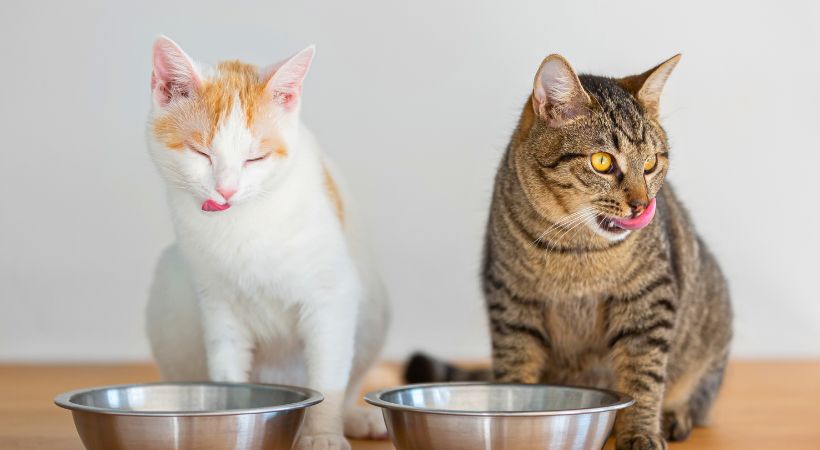
Dry Food for Cats: Kibble for Every Need
Dry food for cats is a valid option for meeting the nutritional needs of your feline companion.
However, contrary to what many people believe, not all kibble is the same: the composition, quality, and even the way it is offered to the pet can make a significant difference.
Here is everything you need to know to choose the best diet for your cat.
What Is the Best Dry Food for Cats?
People often wonder which kibble is best for cats, yet it is difficult to find a single definitive answer. In reality, to make the right choice it is important to carefully evaluate:
- Nutrients. It is advisable to choose cat kibble with the highest protein content, derived from fresh or dehydrated meat or fish, and carbohydrates of plant origin.
- The production system. The proteins contained in kibble should always be processed at low temperatures in order to preserve their full nutritional properties.
- The cat’s age and lifestyle.
- Any specific needs. These include, for example, the need for a reduced-calorie diet following sterilization or neutering, or the presence of food intolerances.
For further details, we invite you to read our articles on the importance of proper nutrients and on homemade diets as an alternative to commercial pet food.
On the market you can also find kibble formulated for specific feline breeds. In reality, this is largely a marketing strategy, because scientific knowledge confirms that all cats are obligate carnivores and require meat as the primary component of their diet.
It should also be considered that most domestic cats are the result of mixed breeding.
Before purchasing kibble, it is therefore essential to check the composition on the label and ensure that proteins are always listed first and never represent less than 28–30% of the total.
Naxos dry food for cats respects these parameters in all its formulations, supporting the wellbeing of your feline companions.
What Is the Best Meat for Cats?
Pork, beef, poultry, rabbit, lamb, and fish are among the best meat sources for cats. It is not necessary to choose single-protein kibble for a healthy cat, at least in the absence of specific medical conditions; a multi-protein diet can satisfy even the most demanding palates and provide greater dietary variety.
For more information on this topic, you may read our article on food intolerances in cats.
What should never be overlooked, however, is the quality and origin of the ingredients. For this reason, at Naxos we use exclusively raw materials made in Italy and GMO-free, both for cats that require single-protein, grain-free nutrition and for those without specific dietary requirements.
Cat Food: Essential Secondary Nutrients
When selecting food carefully for your feline companion, after proteins it is important to verify the presence of all other nutrients necessary for feline health:
- Omega-3 fatty acids, such as EPA and DHA. Their proportions are essential to ensure muscle and joint health.
- Omega-6 fatty acids, which together with omega-3 contribute to healthy skin and coat and facilitate the passage of hairballs.
- Taurine, essential for the prevention of cardiomyopathies. Unlike many other species, the cat’s metabolism cannot synthesize this essential amino acid.
- Mineral salts, which help prevent disorders of the urinary tract.
Regarding urinary tract disorders, it is important to remember that in nature cats obtain water directly from their prey, which consists of approximately 70% water.
A diet composed exclusively of dry food exposes the animal to mild but constant dehydration, which over time can become chronic and develop into kidney disease.
Ideally, a cat’s diet should consist of 50–60% wet food and 40–50% dry food.
Dry Food for Kittens and Kibble for Neutered Cats
Rather than being based on breed, cat food should be adapted according to age and lifestyle requirements. For this reason, Naxos cat kibble is available in three formulations: kitten, adult, and sterilight.
Foods for kittens—often referred to by the English term “kitten”—are designed to support young cats from weaning to adulthood (approximately the first 12 months of life).
Their main characteristics include:
- particularly small kibble size to facilitate chewing
- high protein content
- the addition of vitamins and minerals to support the developing immune system
These formulas are also enriched with antioxidants and specific fibers that support intestinal wellbeing during growth.
From one year of age until about eight years, it is advisable to feed your cat adult kibble. The energy content is reduced in order to prevent obesity.
This is especially important if the cat has been sterilized. In this case it is preferable to offer wet food and kibble specifically formulated for sterilized cats, which further reduce caloric intake while still supporting muscle and skeletal health.
From the age of 6–7 years onward, it is gradually advisable to increase the percentage of wet food in the cat’s diet in order to reduce the risk of kidney disease.
At all stages of life, fiber, vitamins, and minerals remain essential to support the immune and intestinal systems as well as to regulate cholesterol levels.
Scientific research conducted at the University of Messina has shown that Sicilian citrus fruits represent a valuable ally for this purpose. For this reason, at Naxos we have chosen to include them as a superfood in our formulations.
How Much Dry Food Should You Give a Cat?
The amount of kibble to give a cat varies depending on the brand of food chosen, the cat’s weight, and its lifestyle. A strictly indoor cat requires less energy than a cat that spends a great deal of time outdoors.
Generally speaking:
- a 2 kg cat should eat about 40 g per day
- a 3 kg cat about 55 g
- a 4 kg cat about 40–70 g
- a 5 kg cat about 80–90 g, and so on
The correct feeding amounts are indicated on product packaging.
Naturally, if complementary foods or canned food are also provided, the quantities should be adjusted accordingly, preferably after consulting your trusted veterinarian.
How Many Times a Day Should a Cat Eat?
Kittens up to one year of age need to eat many meals throughout the day, so their daily ration should be divided into several small portions (5–7 meals).
Adult cats can eat 2–3 meals per day.
Another option is to leave food available to the cat at all times, provided that the animal is able to regulate its intake. This can be assessed after a trial period of one to two weeks.
If you choose this approach, it is still advisable to refill the bowl several times a day to prevent the kibble from losing its flavor, or to use an automatic feeder.
Fresh, clean water should always be available to your pet. To encourage drinking—and therefore help maintain healthy kidneys—you may consider purchasing a cat water fountain, a device that cats often enjoy and which also contributes to environmental enrichment.
Take a look at the entire range of products we have created for your cat and choose those best suited to its needs. Choosing quality nutrition is the best investment in your cat’s health and a true gesture of love: discover our online and offline points of sale. 🐾