
Cat Colonies: What They Are and How They Work
Cat colonies can help stray cats survive by ensuring they have access to water, food, and shelter. By reading this article, you will learn what they are, which regulations govern them, and how you can register one in your area to lend a helping paw to those in need.
What Is a Cat Colony?
A cat colony is defined as a group of free-roaming cats (at least two) that regularly frequent the same public or private place and may be cared for by citizens and volunteers.
Cat colonies can be registered with the local municipality by a designated caretaker who is formally appointed to manage them and may be issued an official identification card. Veterinary care, however, remains the responsibility of the public authority.
Cat Colonies and Municipalities
Municipalities recognize the work carried out by cat colony caretakers and, in general, help provide part of the food for the cats.
Through dedicated offices, in collaboration with the local health authority (ASL), they oversee the census and sterilization of cats. This is done to combat stray animal overpopulation, which remains a serious social issue and poses risks both to animal welfare and human well-being.
If you would like to learn more about this topic, you can read our in-depth article on combating stray animals.
Cat Colonies and Citizens
Citizens who wish to contribute to the protection of stray cats may freely take care of the registration and management of cat colonies, even without being part of an animal welfare association.
Conversely, those who wish to oppose such activities—for example by complaining about bowls of food left out for street cats—cannot do so. By law, cat colonies cannot be removed or relocated. It is therefore not permitted to move, capture, or put the cats up for adoption.
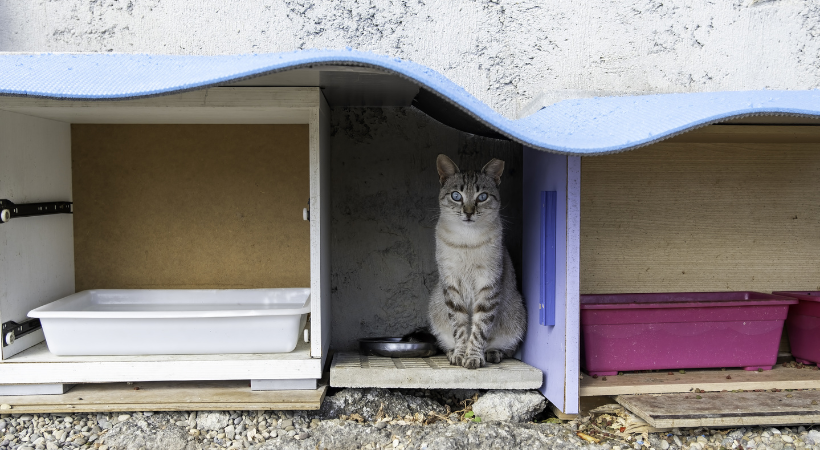
It is, however, permitted to place bowls with water and dry food, as well as small shelters for cats.
Cat Colonies and the Law
What rights do stray cats have? The protection of colony cats is established by Law no. 281 of 1991, which:
- Condemns any act of cruelty against them, including abuse and abandonment;
- Requires the local health authority to sterilize female cats and return them to their colony, as well as to ensure their health care;
- Authorizes euthanasia only in cases of animals that are seriously ill or incurable;
- Recognizes the right of cats and kittens in cat colonies to remain in their territory.
Municipalities, being responsible for stray animals within their territory, may issue specific measures and regulations to protect the species present. Enforcement of compliance with animal protection laws, as established by Presidential Decree of 31 March 1979, falls under the responsibility of the mayor.
Regions may also enact laws that protect and regulate the presence and care of stray animals, defining who is responsible for capturing animals for health reasons and setting requirements for public, private, or affiliated shelters that must care for them until full recovery.
Penalties for Mistreating a Cat
Are you certain that someone has killed or mistreated a cat from a cat colony? Report it to law enforcement, providing any evidence you may have.
Anyone who, out of cruelty or without necessity, causes the death of an animal is punishable by imprisonment from four months to two years, as established by law.
Animal abuse, on the other hand, is punishable by imprisonment from three months to 18 months or by a fine ranging from €5,000 to €30,000.
Adopting Stray Cats
Would you like to adopt a stray cat? Unfortunately, this is not always possible. The law is not uniform throughout the country and, generally speaking, treats ownerless dogs as “strays,” while cats living under the same conditions are considered “free-roaming cats.”
As surprising as it may seem, in theory adoption is only possible for abandoned owned cats or cats with physical impairments. If this is your intention, contact one of the many feline volunteer associations, which can certainly help you carry out your good deed.
Cat Colonies: FAQ
Below are the answers to the most frequently asked questions about cat colonies. If you cannot find the information you are looking for, do not hesitate to contact us for clarification.
How can you help a cat colony?
If you want to help manage free-roaming cats, you can contact local associations, your municipality, or the ASL veterinary service. They will be able to tell you where help is most needed.
How can you recognize a cat colony?
To officially recognize a cat colony, you can submit a formal request using the appropriate form provided by your city’s animal health and urban hygiene unit.
How can you build a shelter for cats?
To provide shelter for stray cats, you can build small houses using plywood or untreated wood, or by cutting an opening in large plastic storage containers commonly used for storing seasonal clothes. Online you can find tutorials showing how to build shelters using the most unexpected recycled materials, with excellent results.
Where can you adopt a cat?
If you wish to adopt a cat, you can contact catteries, feline volunteer associations, or the animal protection authority.
How can a cat colony be funded?
Municipalities establish annual contributions for the management of cat colonies and the requirements to access funding. However, these funds are never sufficient to cover all needs. Volunteers often contribute out of their own pockets, sometimes with the support of associations.
What diseases can stray cats have?
Rarely can viruses, disorders, or diseases affecting stray cats be transmitted to humans, as the two species have different DNA. The most common issues, which instead can threaten the animal’s survival, include: rhinotracheitis, FIP, FeLV, panleukopenia, chlamydiosis, feline flu, restrictive cardiomyopathy, feline herpesvirus, feline calicivirus, pneumonia, and diseases caused by internal and external parasites.
How can the spread of diseases in cat colonies be prevented?
To prevent the spread of diseases in cat colonies and protect the cats’ health, it is advisable to administer antiparasitic treatments (orally, in the case of feral cats) every 30 days, broad-spectrum dewormers every 6 months, and to monitor the cats’ health daily in order to intervene promptly.
What are the benefits of neutering cats?
Neutering cats:
- Prevents uncontrolled population growth;
- Makes cats more sedentary, reducing the risk of accidents or poisoning;
- Reduces the incidence of hormone-related tumors;
- Promotes calmer behavior among males and reduces episodes of aggression, including toward females.
How can you collaborate with animal welfare associations?
You can search online or on your municipality’s website for animal welfare associations in your area and contact them to find out how you can collaborate.
Naxos for Animal Welfare
At Naxos, we care deeply about animal welfare and protection. For this reason, our products are 100% cruelty-free, and we are constantly involved in awareness campaigns aimed at combating abandonment. Recently, we donated 169 kg of cat food to support over three hundred cats living in the shipyard colony in Palermo.
Choose only those who truly love your four-legged friends: discover our range and where to find us.