
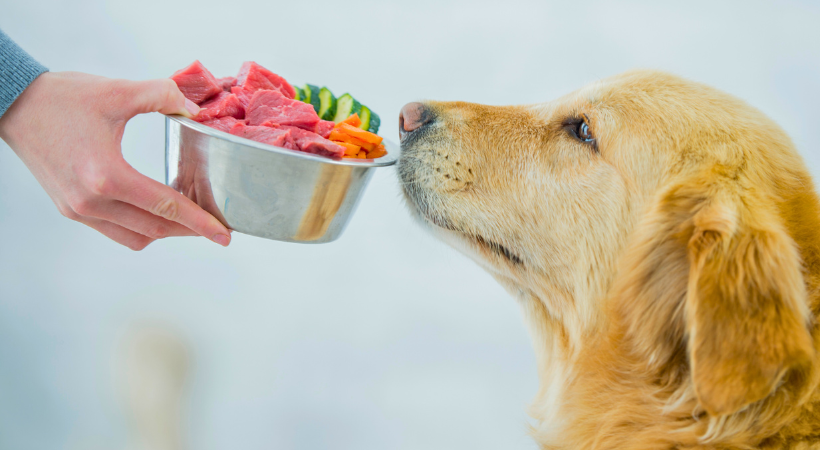
Homemade Diet for Dogs and Cats: Complete Guide
A homemade diet for dogs and cats is the choice of those who want to treat their four-legged friend exactly like any other member of the family. However, to avoid nutritional deficiencies, it is important not to improvise. By reading this article, you will learn how to prepare meals for your furry companion safely and correctly.
Homemade Dog/Cat Diet vs Table Scraps
“I don’t buy packaged pet food, mine eat what we eat.” How many times have you heard this phrase? Yet dogs and cats cannot eat “like us” for at least two reasons:
- Some foods that are harmless to humans can be extremely dangerous—or even fatal—for them. These include sugar, onion, garlic, grapes, raisins, chocolate, avocado, certain types of nuts, and sweeteners such as xylitol;
- Their nutritional needs are different from ours. For good health, a dog needs about 37 nutrients per day, while a cat needs more than 40. These vary in quantity and proportion depending on age, lifestyle, and the presence of any medical conditions. In this regard, FEDIAF has published data on the estimated nutritional requirements of dogs and cats.
Having clarified these essential points, there are therefore two possible options: high-quality commercial pet food or a homemade dog/cat diet formulated by a veterinarian specialized in animal nutrition. The very common habit of feeding pets table scraps should be avoided.
How to Prepare a Homemade Diet for Dogs and Cats
A homemade diet for dogs/cats must include: animal-based proteins, for their essential amino acids; carbohydrates that also provide fiber, such as cooked cereals; fats; minerals; vitamins; and trace elements.
Attention: a carbohydrate-free homemade diet for dogs/cats is possible, because although carbohydrates are essential for the functioning of the brain and respiratory muscles, they are not strictly essential in the diet and can be produced by the body itself (gluconeogenesis), provided that protein quality is high.
It is good practice to vary nutrient sources in order to promote gut microbiota diversity. The quantities of the various components must always be personalized, since every animal is unique, just like every human being. Some extremes, however, should be excluded outright, as they are incompatible with their nutritional needs: vegetarianism and veganism.
In recent years, the BARF diet has also become widespread, based exclusively on raw foods. Although it may resemble a more “natural” feeding model, it cannot guarantee that the meat used is free from dangerous bacteria or viruses, nor that pets living indoors—far removed from a truly “natural” environment—have immune systems capable of neutralizing such pathogens.
Homemade Diet Recipes for Dogs and Cats
Proportions and quantities in a homemade dog/cat diet must be assessed by a professional. However, there are some general and useful guidelines for meal preparation.
Vegetables should be cooked briefly, and the remaining cooking water should be kept and added to the meal so as not to lose released minerals. Garlic and onion must never be used. Cabbage, chard, and spinach should be offered very sparingly, as they can interfere with calcium absorption. Raw seasonal vegetables such as carrots, fennel, pumpkin, zucchini, and chicory are preferable, if accepted, because their nutrients remain intact.
Cereals must be cooked thoroughly to be digestible, or alternatively pre-cooked grains may be used. Among the most suitable cereals are oats, quinoa, buckwheat, spelt, basmati rice, and pearl barley.
Meat and fish must be cooked and served separately, both to ensure safety and to preserve their nutritional properties.
Hypoallergenic homemade diets and single-protein homemade diets for dogs/cats may involve certain necessary restrictions. In these cases, it is essential to carefully assess the origin of the animal’s condition in order to supplement the diet as soon as possible. Read our in-depth article on food intolerances in dogs and cats.
Supplements for Homemade Dog/Cat Diets
To compensate for possible nutrient losses during cooking and to prevent deficiencies, it is advisable to supplement meals with fish oil, flaxseed oil, and multivitamins.
There is a wide range of good supplements for dogs and cats designed for homemade diets. It is important to choose one that is appropriate for the species, suited to the animal’s life stage, and easily absorbed, and to follow the manufacturer’s instructions for correct administration.
Feeding Healthy Dogs and Cats: Age-Related Differences
If dogs and cats are healthy and have no particular disorders, there is no need to exclude any of the recommended foods at any stage of life. This does not mean, however, that they should always eat the same quantities or proportions.
Our advice is to avoid do-it-yourself approaches and to always consult a specialized veterinarian, who can tailor the general guidelines you will find below.
- Homemade diet for puppies: must provide higher caloric intake and a high protein supply to ensure proper physical and mental development. Veal, oily fish, beef, and pork are among the best sources.
- Homemade diet for kittens: requires even greater attention to protein intake, as cats are obligate carnivores. Taurine supplementation is essential, since kittens cannot synthesize it on their own. To learn more, read our in-depth article on kitten nutrition.
- Homemade diet for adult dogs: should balance meats, starchy sources, and vegetables, with appropriate supplementation as mentioned above. In addition to toxic foods, pasta, rice, and starches should also be avoided. Pay attention to overweight issues caused by a sedentary lifestyle or sterilization not supported by a proper diet.
- Homemade diet for adult cats: consists mainly of meat and Omega-3 and Omega-6 fatty acids. Cereals are an unnecessary surplus.
- Homemade diet for senior dogs: should prioritize proteins that slow the natural loss of muscle mass, such as veal, turkey, chicken, lamb, eggs, and fish. The best fats at this life stage come from salmon and white fish, fish oil, chicken, pork, and duck fat. Fruits and vegetables help increase fiber intake.
- Homemade diet for senior cats: should include highly digestible proteins and foods low in phosphorus. If the cat does not eat vegetables, grass grown in the garden or in pots becomes essential.
Attention: it is not true that dogs and cats should eat only 1–2 times a day, either as puppies or as adults. Strong scientific evidence shows that keeping the gut active helps prevent dangerous gastrointestinal diseases. In nature, cats eat up to 9–12 small meals a day, while dogs should eat at least 2–3 times daily.
For cats of all ages, it is also very important to consider the prevention and management of hairballs, starting precisely with proper nutrition.
Nutrition for Dogs and Cats with Health Problems
Any health issue in your pet requires changes to the feeding plan. Below are the most common cases:
- The homemade diet for dogs/cats with allergies, intolerances, or dermatitis should be an elimination diet, at least in the initial phase.
- The homemade diet for dogs/cats with kidney disease or struvite stones should be based exclusively on wet food, low in phosphorus and sodium, and enriched with an appropriate selection of well-blended raw and cooked vegetables.
- The homemade diet for diabetic dogs/cats should have a very low glycemic index.
- The homemade diet for dogs/cats with diarrhea should be based on highly digestible meats.
- The homemade diet for dogs/cats with liver disease or hepatic disorders should be low in protein.
- The homemade diet for obese dogs/cats should be low in calories and include foods that stimulate metabolism.
- The homemade diet for epileptic dogs/cats should exclude sources of complex carbohydrates (rice, pasta, potatoes).
- The homemade diet for dogs/cats with leishmaniasis remains a much-debated topic: on one hand, cachexia and muscle wasting would require increased protein intake; on the other hand, elevated urea and creatinine levels would suggest reducing protein intake.
Homemade vs Industrial Diet: Which Is Better?
Industrial pet food is certainly the best solution for those who do not have time to cook for their furry companions and who do not want to risk dangerous nutritional deficiencies that could compromise a dog’s or cat’s health.
Concerned that the raw materials used to produce kibble and canned food might be of poor quality? Choose Naxos, the only Italian company that uses 100% Made in Italy raw materials from a short supply chain and enriches every bowl with valuable superfoods.
Take a look at our range for dogs and cats of all ages and with specific dietary needs.