

When and How to Bathe a Cat in Summer
We know it all too well: bathing a cat is anything but easy!
Yet this need arises because summer brings sunshine and heat, and unfortunately also dust, parasites, and dirt that our little felines pick up outdoors.
It’s true that cats devote hours each day to self-grooming, but there are occasions when human intervention is genuinely necessary to ensure a thorough clean.
Feline Coat Structure and Water Tolerance
A cat’s coat is a remarkably efficient structure that insulates the body from both cold and heat. The undercoat tends to become saturated with water very quickly on contact with liquid, leaving the animal clumsy and slower in its movements.
This is precisely why cats have an instinctive wariness of water: it stems from a fear of losing their natural agility.
Consider that a cat’s saliva contains special enzymes that remove impurities and keep the coat almost odourless.
However, this self-cleaning mechanism isn’t always enough when a cat gets into substances that are difficult to remove or potentially harmful.
To best safeguard your cat’s health, it’s essential to understand when an actual bath is called for.
When to Bathe a Cat During the Hot Months
Whether or not to bathe a cat depends on the animal’s lifestyle and coat type. An indoor-only cat will get far less dirty than one that spends time exploring the garden.
Summer also often coincides with the shedding season, a time when a little extra help prevents excessive ingestion of loose fur.
A bath or thorough cleaning becomes necessary in these specific situations:
Contact with harmful, sticky, or toxic substances such as oils, tar, or plant-care products.
Reduced mobility due to surgery, significant obesity, or advanced age, which prevents the cat from grooming itself properly.
A coat visibly caked with dirt or mud, or infested with summer parasites.
Tight mats in long fur, which risk tightening even further when wet.
How to Bathe Your Cat While Minimising Stress

To wash your cat without hassle, it helps to prepare everything you’ll need beforehand, keeping the process as brief as possible.
You’ll need a roomy basin with about 10 centimetres of lukewarm water, kept at around 38°C (100°F).
Before wetting a cat, it’s a good idea to brush it thoroughly to remove loose fur and gently work out any surface tangles.
During the bath, pour water over the body gently, using your hand as a filter so as not to frighten the cat. Take great care to keep the face and ears completely dry.
Next, apply a cat-specific shampoo, massaging it in with calm movements, and rinse thoroughly to avoid irritating the skin.
We recommend gathering all the supplies before you begin, to reduce both the time involved and your cat’s stress, keeping everything within easy reach:
- A cat-specific shampoo, ideally a gentle, fragrance-free formula.
- A brush or comb suited to the coat type, essential both before and after the bath.
- At least two large towels, pre-warmed, to wrap around your cat straight after the bath.
- A jug or lightweight container for pouring water over the body, rather than using a direct shower spray.
- A hairdryer, positioned nearby but out of the cat’s reach, ready to use only if needed.
- A tasty treat or appealing snack to offer during or right after the grooming session.
Waterless Alternatives for Cleaning a Cat
If your cat shows signs of significant stress, anxiety, or aggression, it’s best to avoid running water altogether so as not to frighten it. There are excellent alternative solutions that provide a deep clean without causing the cat any distress.
A very effective option is foaming dry shampoo, massaged into the coat and then removed with a soft brush.
Alternatively, damp cloths or pet-specific cleansing wipes work well to remove dust and freshen up paws after outdoor play.
Regular cleaning of this kind also helps prevent the build-up of fur in the stomach caused by self-licking.
What to Feed Your Cat as a Reward After Bath Time
Right after the bath, it’s important to offer your cat a tasty reward to help it associate the experience with a positive moment.
This positive reinforcement strategy helps the cat relax and makes future baths much easier. Offering a tasty, balanced meal is the best way to reward your kitten after bath time.
Naxos Sterilight Blue Fish and Pomegranate
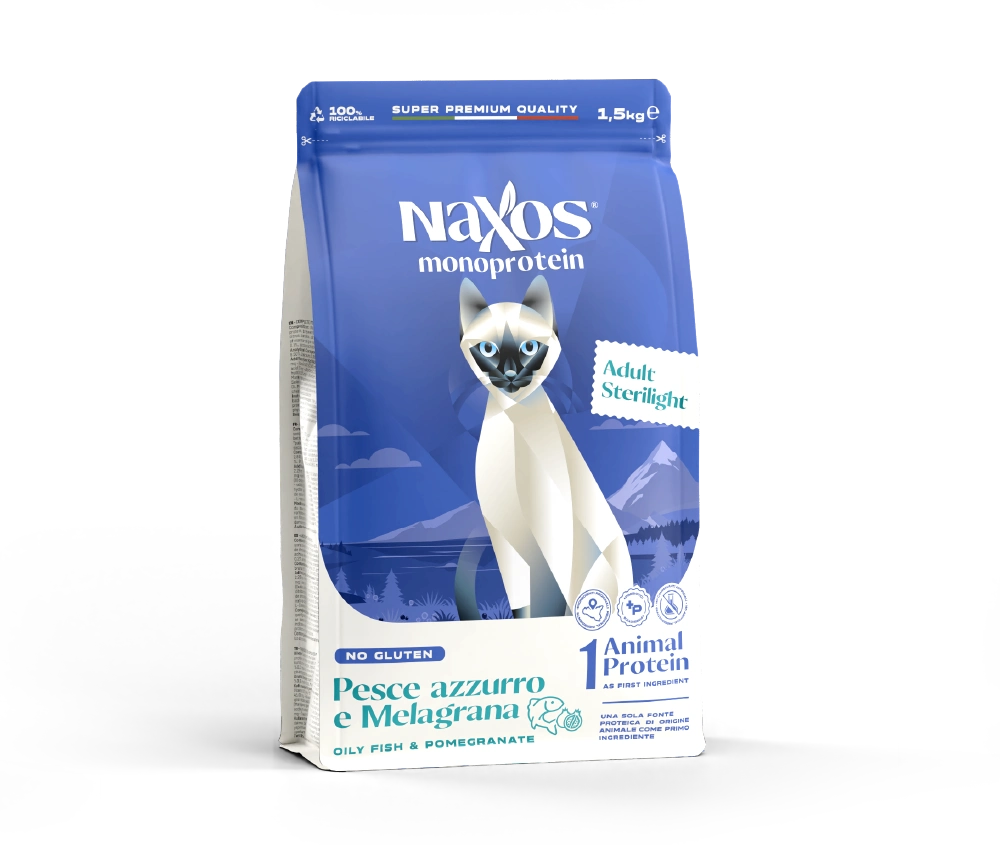
Naxos Adult Sterilight Blue Fish and Pomegranate is a complete food designed for sterilised cats or those prone to weight gain. This single-protein recipe, featuring sustainably sourced blue fish as the sole animal protein source, is enriched with pomegranate, spirulina algae, and prickly pear, ingredients that support skin, coat, and digestive health. The naturally occurring Omega-3 fatty acids in the fish also help keep skin and coat healthy, an especially important benefit during the summer months.
Kitten Mousse Monoprotein Pesce Azzurro

For kittens between two and twelve months old, this soft, single-protein mousse made with blue fish offers high digestibility during the early stages of growth.
Special ingredients of Kitten Mousse Monoprotein Oily fish, such as pomegranate and spirulina algae, help strengthen the immune system, while salmon oil provides the essential nutrients needed for brain development.